Skip to content
Georgina Delgado.

Projects and evidence

Work from the lab and the classroom

Laboratory records and collaborative research from my textile and materials engineering studies.
Martindale abrasion resistance of Ahlstrom nonwovens
Material testing28 October 2025

Martindale abrasion resistance of Ahlstrom nonwovens

Course / context
Nonwovens — abrasion testing laboratory, TAMK
Objective
Determine specimen breakdown under abrasion using SFS-EN ISO 12947-2:2016, comparing two Ahlstrom nonwoven specimens.
Method
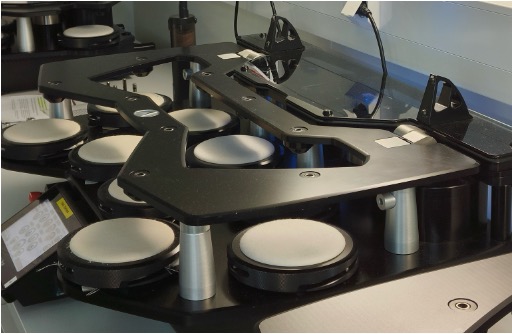
The report specifies Martindale abrasion testing, foam backing, standard atmosphere (65% relative humidity, 20°C) and microscope observation above 10× magnification. Observations are recorded at 1,000-rub intervals; nominal pressure and test interval fields are not completed.
My contribution
I worked collaboratively with my group during the abrasion testing laboratory. My responsibilities included operating the testing equipment, recording measurements, and contributing to the preparation of the laboratory report.
Results
At 1,000 rubs, the first layer was coming off both samples, with sample 1 worse. At 2,000 rubs, edge abrasion increased; at 3,000, pilling increased and the second layer was coming off; at 4,000, both specimens became more open. The 5,000-rub note is incomplete, later observations are blank and no final breakdown count is reported. The stated endpoint is a hole equal to 2.5 mm.
Reflection
I gained practical experience with laboratory testing and learned about the importance of accurate measurement, organised data recording, and teamwork when carrying out experiments and preparing technical reports. I would now like to develop my ability to interpret test results and understand how abrasion testing can be used to evaluate textile durability and quality.
Coffee-dyed Marimekko woven fabric — laboratory testing programme
Material testingMarch 2026

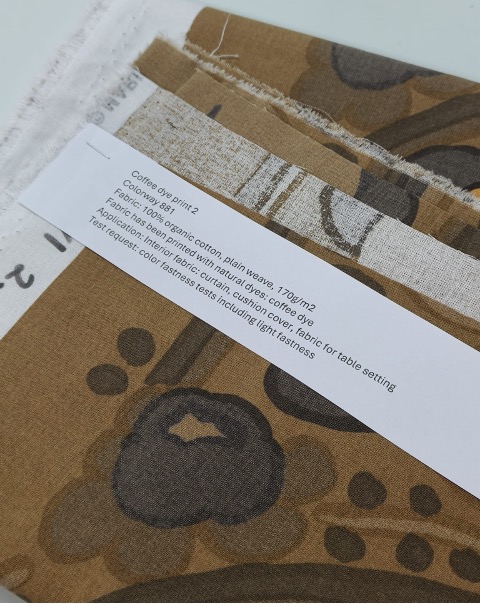
Coffee-dyed Marimekko woven fabric — laboratory testing programme

Course / context
Textile Quality Management, TAMK, March 2026. Co-authored with Nawanga Udawaththage, Kaolhinn Jumppanen-Allen and Unna Kenius. Six laboratory sessions testing a newly developed coffee-dyed woven fabric from Marimekko, with results reported to the company. The end use was not specified, but Marimekko fabrics are generally designed for home textiles.
Objective
To evaluate the physical and performance characteristics of the coffee-dyed woven fabric and assess its appropriateness for intended end uses such as cushion covers, kitchen textiles and curtains, by testing durability, appearance and behaviour under everyday wear conditions.
Method
Six test types across the laboratory sessions: abrasion resistance, mass per unit area, colour fastness to rubbing, dimensional change in washing, colour fastness to washing, and pilling and fuzzing resistance. Testing was largely determined by the Ecodesign requirements for consumer textiles, under the sections appropriate to this textile.
My contribution
We carried out the tests together as a group. I took part in running the tests, operating the laboratory equipment and preparing the report.
Results
Abrasion resistance of at least 25,000 rubs at 9 kPa, with no specimen breakdown. Mass per unit area 190 g/m². Colour fastness to rubbing: dry 4/5, wet 1/5. Colour fastness to washing: no staining on any adjacent fabric (grade 5) but a grade 2 colour change on the specimen, meaning the fabric fades in the wash. Dimensional change in washing −3% lengthwise and −2% widthwise. After 7,000 rubs: pilling grade 5, fuzzing 3–4. The fabric is durable and resists pilling, but fails the wet rubbing and colour-change requirements for all intended end uses, so dye retention still needs development.
Reflection
The programme taught me how a fabric can perform well in one test and fail another, and why results must always be judged against the requirements of the intended end use. Working through six standardised tests also showed how Ecodesign requirements turn quality criteria into concrete laboratory work.
Inorganic Materials in Technical Textile Applications
Technical reportApril 2026

Inorganic Materials in Technical Textile Applications

Course / context
Smart and High-Performance Materials — group report, Textile and Material Engineering, TAMK. Written together with Kaolhinn Jumppanen-Allen and Nawanga Udawaththage. 33 pages plus appendices.
Objective
To examine the role of inorganic materials — metal, glass, ceramic, carbon and mineral fibres — in technical textiles, and to analyse two applications in depth: inorganic fire-retardant coatings and antimicrobial textiles.
Method
A referenced report with two case studies. The fire-retardant case reviews silicon dioxide, magnesium hydroxide and titanium dioxide coatings; the antimicrobial case reviews silver, zinc oxide and copper oxide treatments. Findings are drawn from published studies — for example Xian-Wei C. et al. (2023) on silk treated with magnesium hydroxide and Hadi Fallah M. et al. (2011) on sol-gel titanium dioxide on cotton — and assessed against SFS-EN ISO 11612:2015 for protective clothing.
My contribution
This was a group project where we shared all the work — each of us did a little bit of everything. We shared the research and report writing as a group.
Results
Both treated silk samples stopped a flame from propagating up the strip, and the magnesium hydroxide finish kept B1 flame-retardant classification for 15 wash cycles but fell below the required level after 20. Treated samples also showed increased LOI values, meaning lower combustibility. The report's discussion records the trade-offs: silica coating caused surface microcracking, magnesium hydroxide raised stiffness and lowered tensile strength at higher nanoparticle concentrations, and the raw materials for silica, titanium and magnesite coatings depend on mining associated with high water and fossil-fuel use and pollution.
Environmental Challenges in Geotechnical Textiles
Sustainability2 March 2025

Environmental Challenges in Geotechnical Textiles

Course / context
Technical Textiles — individual written assignment, TEMA24
Objective
To examine the environmental challenges of geotextiles used in construction activities such as road construction, drainage systems, slope construction and erosion control, and to weigh the case for and against synthetic geotextiles.
Method
A referenced written review drawing on published sources: Koerner, Designing with Geosynthetics (2012); Rankilor, 'Textiles in civil engineering. Part 1 – geotextiles'; and Tanasă, Nechifor, Ignat & Teacă (2022), 'Geotextiles — A Versatile Tool for Environmental Sensitive Applications in Geotechnical Engineering', Textiles 2(2), 189–208.
My contribution
The submitted assignment carries my name (TEMA24), with no co-authors listed.
Results
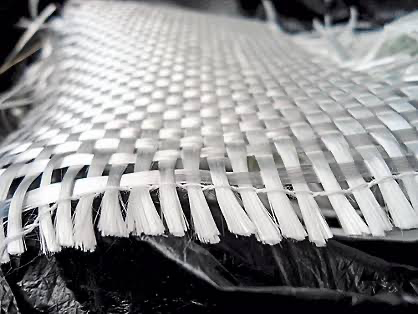
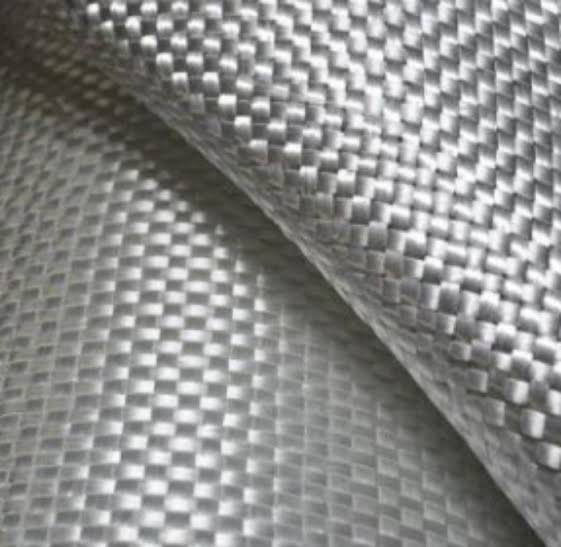
The review identifies four main challenges. Most geotextiles are made from fossil-based polypropylene (PP) and polyester (PET), so production is energy- and resource-intensive and adds to the carbon footprint, and bio-based alternatives are often not durable enough for geotechnical use. Once installed underground, geotextiles are difficult to recover without disturbing the surrounding soil, and excavated material contaminated with soil and asphalt is very hard to recycle. Degrading geotextiles can also release microplastics into the surrounding soil and water, while UV stabilisers and flame retardants further hinder recycling. Against this, the review sets out the counter-argument that the long service life of synthetic materials can make them more sustainable than short-lived natural alternatives.
Marimekko: A Critical Analysis
Technical reportNovember 2025

Marimekko: A Critical Analysis

Course / context
Industrial Economics final assignment, November 2025. Co-authored by Georgina Delgado Alis, Kaolhinn Jumppanen-Allen, Unna Kenius and Casper Toivola.
Objective
Connect industrial economics theory with a textile company's pricing, costs, investments, quality systems, sustainability and supply chain.
Method
A 26-page group case study using referenced company material and other published sources. Sections cover market structure, pricing, operations, profitability, investments, quality management and ERP, sustainability, and supply chain and production planning.
My contribution
Named co-author of the group report. I took part in the research and in writing the report together with the group.
Results
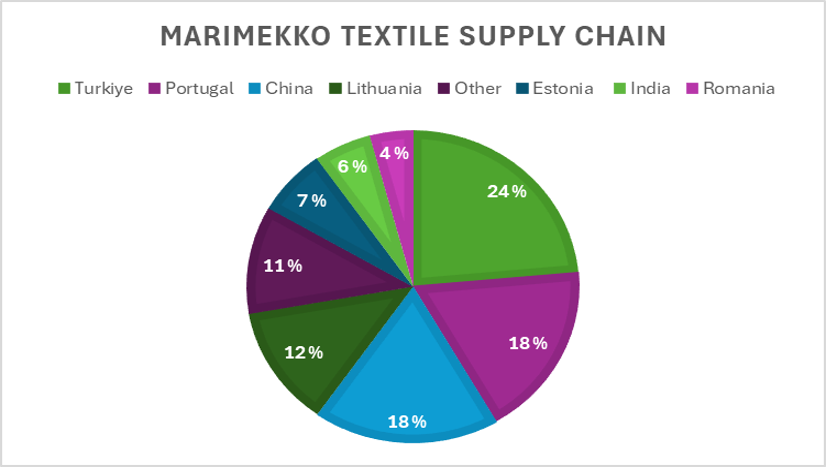
The report concludes that Marimekko competes through distinctive design and brand value, identifies international supply-chain risks, and recommends greater transparency and more measurable sustainability reporting. Its supply-chain chart places about 24% of textile production in Türkiye, 18% each in Portugal and China, and 12% in Lithuania, with the remainder in Estonia, India, Romania and other countries. These are the group's case-study conclusions, not laboratory measurements or independently verified company findings.
Reflection
Marimekko started as a small textile producer and has evolved into a globally recognised brand, differentiating itself through values of sustainability, creativity, self-expression and timeless design — the Unikko print, with its bold colours, has become a symbol of Finnish design and cultural identity. I learned that Marimekko operates in monopolistic competition, where customers pay a higher price for quality and design rather than technical innovation, and that its reliance on international supply-chain partners brings geopolitical risks, logistical challenges and less control over suppliers. The company has prioritised digitalisation and international growth through cloud-based ERP systems, online retailing and 3D design, which has opened new customer markets, particularly in Asia, and simplified global supply-chain management — all in line with its SCALE strategy (sustainability, creativity, acceleration, love, efficiency). I concluded that the company's sustainability initiatives would benefit from greater transparency and more measurable reporting of results.